The Praying Mantis Has Arrived: Is British Wildlife Becoming European?


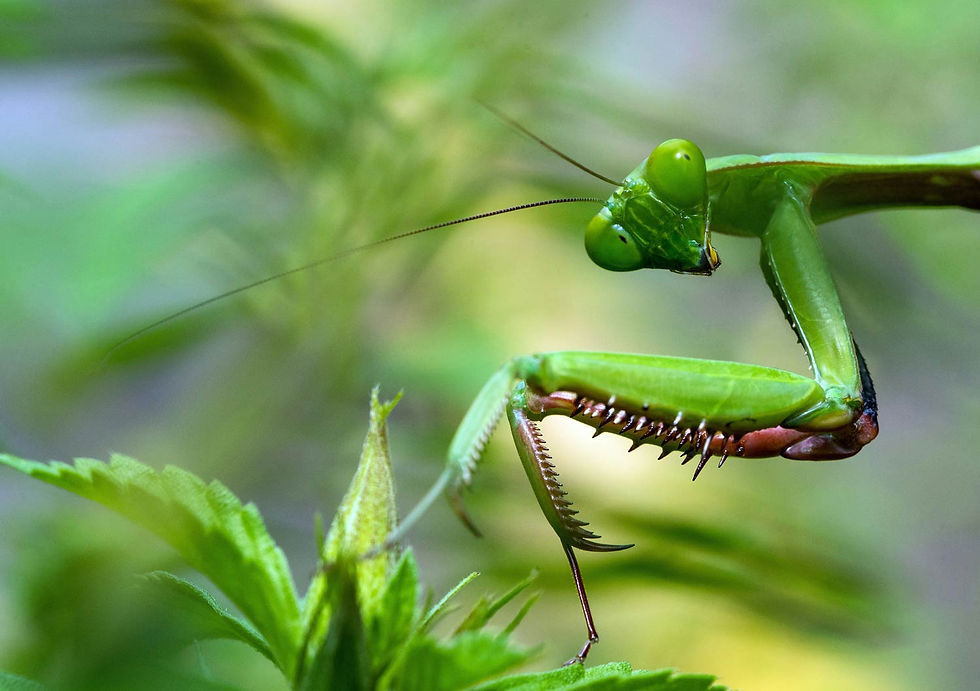
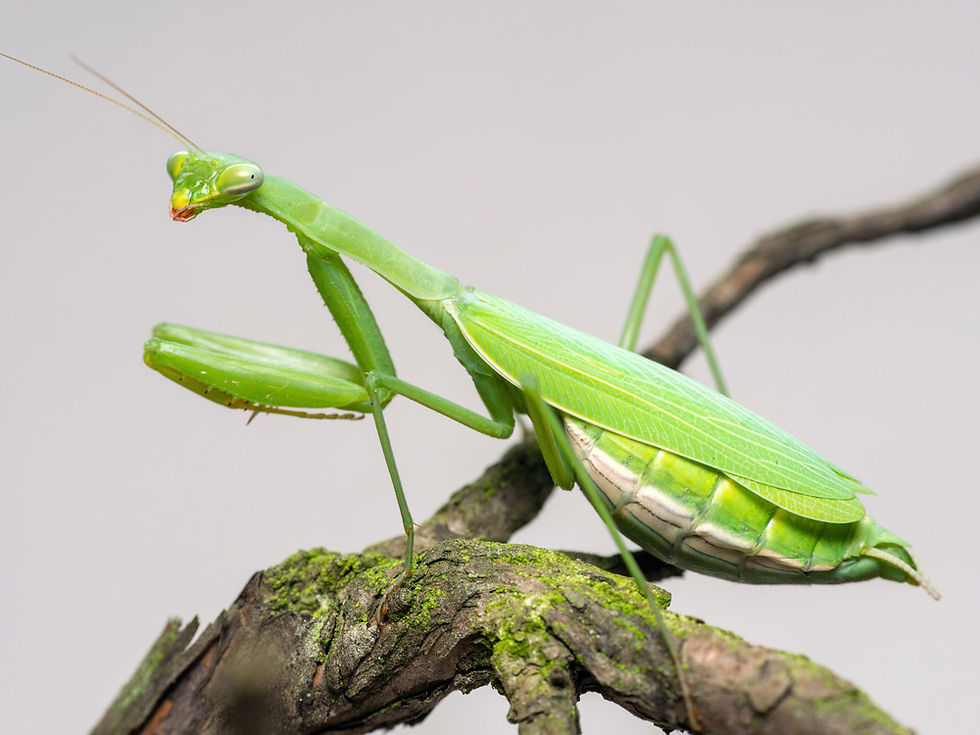
Seeing a praying mantis in Britain once sounded like the sort of thing that would require a greenhouse, an escaped pet or an exceptionally confused insect. Yet during the summer of 2026, ten European praying mantis nymphs were discovered at a school in Cornwall, providing what wildlife experts described as potentially the first evidence of the species breeding on the British mainland. Adult mantises had already been photographed at several locations in Cornwall, while populations are established on the Isle of Wight and Channel Islands.
That is quite a change from the historical picture. The Natural History Museum's records note a European praying mantis in East Sussex in 1959, which was thought to have been carried across from continental Europe by strong winds. For decades, a mantis turning up here was therefore an unusual visitor. Today, the question is increasingly whether some of these visitors are beginning to stay.
Britain is becoming easier to reach
The praying mantis is not alone. Scientists and wildlife recorders have reported an increasing number of insects arriving from continental Europe and, in some cases, from much further south. Crickets, moths, butterflies and other species are appearing beyond the ranges where we would traditionally expect to find them, with warmer temperatures making Britain more hospitable to animals that might previously have arrived but failed to survive the winter.
In some ways, this is simply nature doing what nature has always done. Species move when conditions change, and Britain has never had a completely fixed collection of wildlife. The large conehead, for example, is a bush-cricket native to central and southern Europe that has spread northwards as the climate has changed, with records now extending through parts of southern England.
What is different is the speed at which the conditions around these movements are changing. Warmer summers and milder winters can allow insects that once reached Britain only occasionally to survive long enough to reproduce. Over time, a rare visitor can become a breeding population, and eventually something that no longer feels particularly exotic at all.
Does that mean they are invasive?
This is where the story becomes more complicated, because a new species arriving in Britain is not automatically an invasive species.
An animal can be non-native without causing serious ecological harm. Some newcomers may simply occupy available habitat and become another part of the wildlife around us. Others can compete with native species, introduce disease or alter food chains, which is why organisations such as Buglife argue that new sightings need to be investigated rather than automatically celebrated or treated as a crisis. Researchers need to understand whether an animal arrived naturally, was accidentally transported by people, and whether it can reproduce successfully here.
The praying mantis itself is a predator, feeding on insects including flies, crickets and other invertebrates. Whether a growing British population would have any meaningful negative effect on existing wildlife remains uncertain, and there is no reason at present to treat the appearance of a mantis as an ecological emergency.
What it represents may be more important than the animal itself.
A different British countryside
We tend to think of British wildlife as something fairly permanent. Hedgehogs, foxes, badgers, robins and butterflies belong here, while creatures such as cicadas and praying mantises feel as though they belong somewhere warmer. Climate does not recognise those cultural boundaries.
Buglife notes that insects are likely to be among the first groups to show the effects of a changing climate because many have short life cycles and can move relatively quickly. Species adapted to cooler conditions may retreat northwards or uphill, while warmth-loving species expand their ranges from continental Europe.
That does not mean Britain is simply going to acquire all the wildlife of southern France over the next decade. Habitat, rainfall, food, predators and countless other factors determine whether a species can establish itself. However, it does mean the mix of animals we consider typically British is likely to continue changing.
Perhaps in twenty years, spotting a praying mantis in a southern English garden will not cause anyone to reach for their phone.
And that may be the really interesting thing about its arrival. The mantis itself is fascinating, but it may also be a small green sign that the British countryside we grew up recognising is beginning to change around us.