

Why Childhood Independence Has Quietly Disappeared

The Childhood That Used to Roam
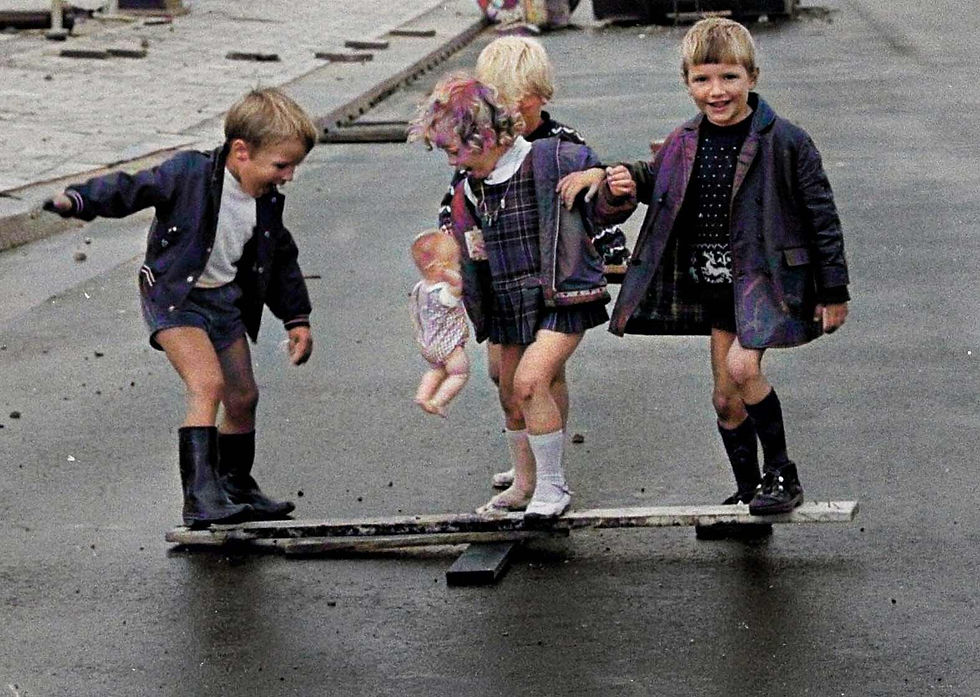
There is a particular kind of childhood memory that feels almost impossible to explain to younger generations without sounding as though you are describing another country. Going out after breakfast and not coming back until tea. Walking to a friend’s house without a parent checking a location app. Playing football in the street until someone shouted from a doorway. Riding a bike further than you were probably supposed to, then finding your way back by instinct, landmarks and sheer confidence.
For many adults, those memories are not grand or dramatic. They are ordinary. That is what makes their disappearance feel so striking. The freedom itself was not treated as a special privilege at the time. It was simply how childhood worked.
Today, that same freedom feels rarer. Children are more supervised, more scheduled and more likely to spend time indoors. Their world is not necessarily smaller in terms of information, because they can access almost anything through a screen, but it often seems smaller in terms of physical freedom. The streets, parks, alleys, shortcuts and patches of grass that once formed the geography of childhood have become less available, less trusted or less used.
This is not just nostalgia speaking. Something has changed in the way childhood is lived.
A Shift That Happened Slowly
The disappearance of childhood independence did not arrive suddenly. There was no single moment when children stopped roaming as freely as they once did. Instead, the change happened gradually, shaped by traffic, parental anxiety, school pressures, screens, changing work patterns and the slow erosion of informal community life.
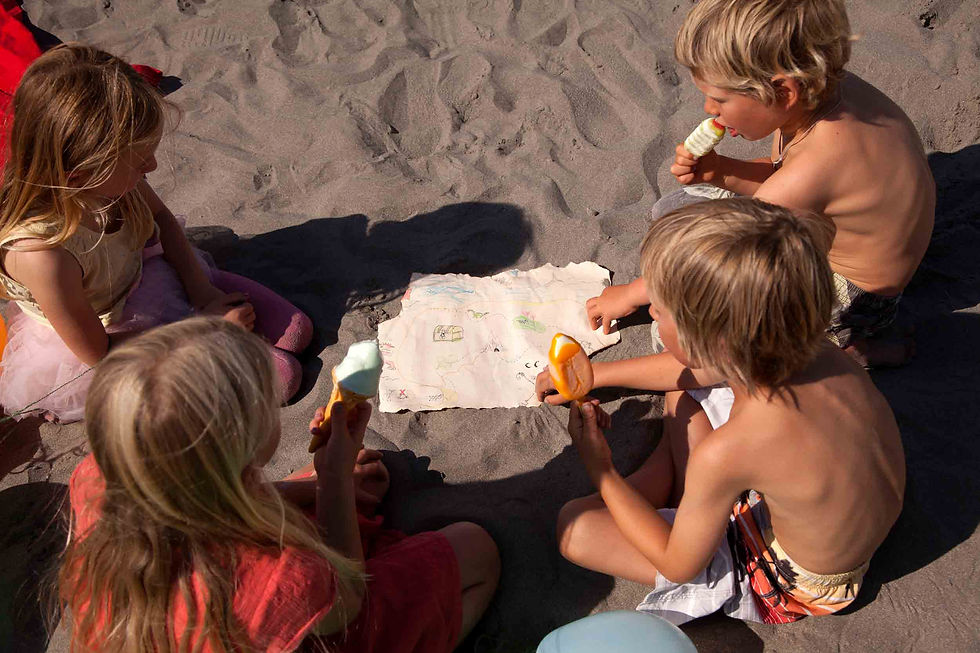
At first, these shifts seemed practical. More cars on the road meant more caution. Busier family schedules meant less unstructured time. Rising awareness of risk made parents more hesitant to let children disappear for hours without contact. Smartphones offered reassurance, but also created the expectation that children should always be reachable.
Over time, what once felt normal began to feel irresponsible. Letting a child walk somewhere alone, play outside unsupervised or make their own way home started to carry a new layer of judgment. Parents were not only asking whether their child was ready, but whether other people would think they had made the wrong decision.
That social pressure matters. Childhood independence does not disappear only because parents become more fearful. It disappears because the culture around parenting changes, and the definition of a “good parent” becomes more closely linked to constant supervision.
Traffic Changed the Shape of Childhood
One of the most practical reasons children have less independence is also one of the most visible. Roads have become busier, cars have become larger, and many neighbourhoods feel less safe for walking, cycling or playing than they once did.
For children, independence often begins with movement. The ability to walk to school, visit a friend, go to a park or ride a bike around the local area is not just transport. It is how confidence develops. It is how children learn judgment, direction, risk and responsibility in small, manageable ways.
When roads feel unsafe, that freedom shrinks. Parents may still want their children to walk or cycle, but the environment often makes that decision harder than it should be. A child’s independence is then limited not by their own ability, but by the design of the streets around them.
This is one of the reasons the issue cannot be reduced to parental anxiety alone. If neighbourhoods are built around cars rather than children, then childhood naturally becomes more restricted.
The Loss of Outdoor Play
Outdoor play has also become less central to children’s daily lives. In previous generations, playing outside was often the default. It did not require much planning, money or adult involvement. Children gathered, invented games, negotiated rules and filled time through imagination.

Now, outdoor play often has to be arranged. It is more likely to happen in designated spaces, under adult supervision, during structured activities or organised playdates. That can still be valuable, but it is not quite the same as the free, unsupervised play that allows children to test independence on their own terms.
The loss matters because play is not just entertainment. It is how children practise being in the world. Through play, they learn compromise, resilience, confidence and social judgement. They experience boredom, frustration, conflict and resolution without an adult stepping in immediately to manage every moment.
When that kind of play becomes less common, children do not only lose exercise or fresh air. They lose small opportunities to become capable.
Screens Did Not Cause Everything, But They Filled the Space
It would be too easy to blame screens for the decline of childhood independence, and it would not be entirely fair. Children were spending less time outdoors before tablets and smartphones became as dominant as they are now, and many of the barriers to independence are physical, social and cultural.
But screens have changed the equation.
Where previous generations might have gone outside because there was little else to do, children today have endless entertainment available indoors. Games, videos, group chats and social platforms can provide connection, stimulation and distraction without leaving the house. That does not mean digital life is worthless, but it does mean the pull of the outdoors has more competition than it once did.
The problem is not simply that children are looking at screens. It is that screens can become the replacement for the unstructured spaces where independence used to grow. A child can now be socially active while physically still, entertained while isolated, and connected while remaining inside.
That is a very different kind of childhood.
Parents Are Not the Villains
Any honest discussion about this has to avoid blaming parents too easily. Most parents are not trying to limit their children’s lives for the sake of it. They are responding to the world around them.
They are navigating traffic, safety fears, social judgement, long working hours, rising costs and a culture that often expects them to manage every part of their child’s development. They are also raising children in an age where every rare tragedy is amplified online, making risks feel closer and more constant than they statistically may be.
The result is a form of parenting that can become more protective than many adults might have expected of themselves. Parents who remember roaming freely as children may still hesitate to offer the same freedom to their own. Not because they do not value it, but because the world feels different, and because the consequences of getting it wrong feel unbearable.
That emotional reality cannot be dismissed.
What Children Lose When Freedom Shrinks
The loss of independence is not only about childhood memories. It has practical consequences.
Children who have fewer chances to move around independently may have fewer opportunities to build confidence in their own judgement. They may become less familiar with their local area, less comfortable navigating public space and less experienced in managing small risks without adult intervention.
Independence does not appear suddenly at sixteen or eighteen. It is built gradually through smaller freedoms. Walking to the shop. Crossing roads safely. Handling a disagreement with another child. Getting slightly lost and working out the way back. These moments may seem minor, but together they teach children that they can operate in the world.
When those experiences are delayed or removed, growing up can become more abrupt. Children are protected for longer, then expected to become independent almost overnight.
The Community Problem
There is also a community dimension to this. Childhood independence relies on more than parental permission. It relies on neighbourhoods where adults recognise each other, where public spaces feel shared, and where children are visible without being treated as a nuisance.
In many places, that informal safety net has weakened. Fewer people know their neighbours. Public spaces feel more contested. Children playing outside can be seen as noisy, risky or inconvenient rather than simply part of local life.
This matters because a child’s freedom depends partly on whether the wider community makes room for children to exist. If streets are hostile, parks are neglected, play areas are underfunded and public spaces are treated as places to pass through rather than belong to, childhood becomes more contained.
It is not enough to tell parents to let children out more. The world outside has to be worth letting them into.
A Quiet Cultural Loss
What makes this issue so powerful is that it is not only about children. It is also about what adults remember and what society has quietly allowed to fade.
Many people look back on their own childhood freedom with affection because it gave them a sense of possibility. The world felt larger because they were allowed to explore a small part of it on their own. That kind of freedom shaped confidence, friendship, imagination and identity.
The disappearance of that freedom is easy to overlook because it does not happen as a dramatic event. It happens when a walk becomes a lift, when a park visit becomes a supervised activity, when a street game becomes impossible because of traffic, when a child’s spare time moves indoors without anyone quite deciding that it should.
Before long, a way of growing up has changed.
Rebuilding Independence
The answer is not to pretend we can simply return to the past. The world has changed, and some of those changes are real. Roads are busier, digital life is embedded, and parents face pressures previous generations did not experience in the same way.
But that does not mean childhood independence has to disappear entirely.
It can be rebuilt gradually, through safer streets, better play spaces, more walking routes, stronger communities and a more forgiving attitude towards children being visible in public. It can also be rebuilt in families through small steps, giving children age-appropriate freedoms that expand over time.
The point is not to romanticise risk. It is to recognise that a childhood without independence carries risks of its own.
The Freedom Children Still Need
Childhood does not need to look exactly as it did thirty or forty years ago to be healthy, joyful or meaningful. But children still need space to explore, to make decisions, to be bored, to be brave, to get things slightly wrong and to discover that they can cope.
Independence is not a luxury added onto childhood once everything else is sorted. It is one of the ways childhood does its work.
That may be why the loss feels so personal for many adults. It is not just that children today spend less time outside, or that they are more supervised than before. It is the sense that something ordinary and formative has become harder to give them.
A child’s world should grow as they grow.
The worry is that, for too many, it has quietly become smaller.


