top of page
What Is Happening to the Systems We Rely On?

What Is Happening to the Systems We Rely On?

7 May 2026

Paul Francis

Want your article or story on our site? Contact us here

A Feeling That Is Hard to Pin Down

It does not usually arrive all at once. It builds slowly, in small moments that feel disconnected at first. A setting was switched on without your knowledge. A device behaving differently from how it did when you bought it. A street that feels less settled than it once did, where certain behaviours now go unchallenged.
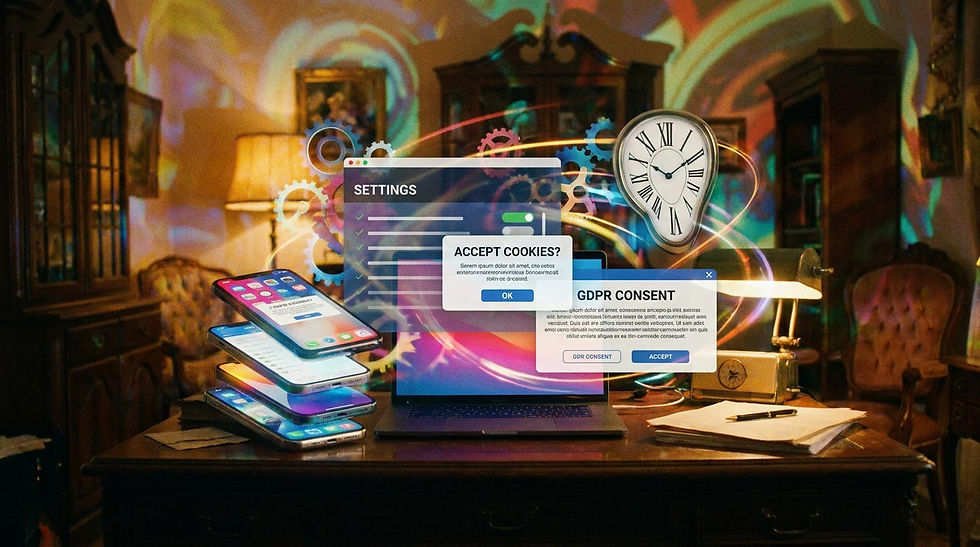

Vintage room with floating smartphones, laptop, and clock displaying vibrant overlays. Pop-ups show cookie and GDPR consent messages.

Individually, none of these things seems large enough to carry much weight. They are easy to dismiss, easy to move past. But over time, they begin to form a pattern. Not a dramatic collapse, not a sudden failure, but something quieter and harder to define. The systems are still there. The structures still exist. And yet, for many people, their experience has begun to feel different.


Control Without Clarity

Technology was supposed to offer greater control. In many ways, it still does. Devices are more capable, more responsive and more integrated into daily life than ever before. But that increased capability has come with a subtle shift in how control is exercised.


Features appear without being clearly introduced. Settings are enabled without a clear moment of agreement. Changes arrive through updates that alter behaviour long after a product has been purchased. The choice to opt out exists, but it is often hidden behind layers of menus that require effort to navigate.


What emerges is not a loss of technology, but a change in the relationship with it. Control becomes something that feels conditional rather than absolute. The tools are still in your hands, but the decisions are not always made by you.


Protection That Feels Distant

The same pattern can be seen in how data and privacy are managed. Regulations such as GDPR were introduced with the promise of clarity, transparency and user control. They still exist, and they still provide a framework for how data should be handled.


Yet the everyday experience rarely reflects that promise in a straightforward way.

Consent is often given through long, complex terms that are accepted quickly and rarely revisited. Options to limit data use are present, but not always easy to find or understand. The structure of protection remains intact, but the feeling of being protected is less immediate.


This creates a gap between principle and practice. The system is working in a technical sense, but its presence is not always felt in the moments where it matters most.


Table with a laptop, tablet, phone, and smartwatch displaying cookie settings and privacy policy pop-ups, in a modern office setting.

Order Without Presence

At street level, a similar shift is taking place. The police have not disappeared, and the responsibilities they carry have not diminished. In fact, they have expanded to include a wider range of complex and serious issues, but the way policing is experienced has changed.


There is a less visible presence in many areas. Anti-social behaviour, particularly involving fast-moving vehicles such as e-bikes and mopeds, feels more frequent and more open. Intervention, when it happens, often comes after the fact rather than at the point where behaviour begins to take hold.


For residents, this does not always register as a failure of policing, but as a change in how it is felt. The system remains in place, but its presence is less immediate, less visible and less predictable.


A Pattern Emerging

Taken together, these experiences begin to point in the same direction.

Technology is still advancing, but control feels less direct. Regulation is still in force, but protection feels less tangible. Policing is still operating, but order feels less present.


None of these systems has disappeared. None has collapsed. But the relationship between those systems and the people who rely on them has shifted. This is what makes the change difficult to describe. It is not defined by absence, but by distance.


The Role of Scale and Complexity

Part of the explanation lies in how large and complex modern systems have become. Technology platforms operate globally, regulations must account for rapidly evolving environments, and policing has to respond to a broader and more demanding set of challenges than ever before.


As systems grow in scale, they often become less personal. Decisions are made further away from the people they affect. Processes become more standardised, more automated and, in many cases, less visible.


This can create efficiency, but it can also create detachment. The system functions, but it does so at a level that feels removed from everyday experience.


When Trust Becomes the Missing Element

What ties all of this together is not simply function, but trust. People do not need to see every part of a system working in order to believe in it. But they do need to feel that it is operating in a way that is clear, fair and responsive to their needs. When that feeling begins to fade, the system itself can start to feel less reliable, even if its underlying structure remains sound.


Trust is built through visibility, clarity and consistency. When changes happen quietly, when protections feel hidden and when presence feels reduced, that trust becomes harder to maintain.


Not a Collapse, but a Drift

It would be easy to frame this as a breakdown, but that would miss the nature of what is happening. This is not a collapse of the systems we rely on. It is a gradual drift in how they are experienced. A shift from direct interaction to something more distant, more automated and, at times, more difficult to influence.


That distinction matters because it changes how the problem is understood. The issue is not that systems no longer exist, but that they no longer feel as connected to the people they serve.


The Question That Remains

If there is a single question that sits at the centre of all this, it is a simple one. What should these systems feel like when they are working properly?


Not in a technical sense, not in terms of compliance or performance, but in the everyday experience of the people who rely on them.


Because that experience is what ultimately defines whether a system is trusted, whether it is accepted, and whether it is seen as serving the public rather than operating around it.

At the moment, something in that experience is shifting.


The systems are still there. But for many, the connection to them no longer feels quite the same.

Current Most Read

What Is Happening to the Systems We Rely On?
The Police Are Still There. So, Why Does It Feel Like They Aren’t?
A Country on Edge: Why Hate Against UK Communities Feels Harder to Ignore

What Is Happening to the Systems We Rely On?

  • Writer: Paul Francis
    Paul Francis
  • 3 hours ago
  • 4 min read

A Feeling That Is Hard to Pin Down

It does not usually arrive all at once. It builds slowly, in small moments that feel disconnected at first. A setting was switched on without your knowledge. A device behaving differently from how it did when you bought it. A street that feels less settled than it once did, where certain behaviours now go unchallenged.


Vintage room with floating smartphones, laptop, and clock displaying vibrant overlays. Pop-ups show cookie and GDPR consent messages.

Individually, none of these things seems large enough to carry much weight. They are easy to dismiss, easy to move past. But over time, they begin to form a pattern. Not a dramatic collapse, not a sudden failure, but something quieter and harder to define. The systems are still there. The structures still exist. And yet, for many people, their experience has begun to feel different.


Control Without Clarity

Technology was supposed to offer greater control. In many ways, it still does. Devices are more capable, more responsive and more integrated into daily life than ever before. But that increased capability has come with a subtle shift in how control is exercised.


Features appear without being clearly introduced. Settings are enabled without a clear moment of agreement. Changes arrive through updates that alter behaviour long after a product has been purchased. The choice to opt out exists, but it is often hidden behind layers of menus that require effort to navigate.


What emerges is not a loss of technology, but a change in the relationship with it. Control becomes something that feels conditional rather than absolute. The tools are still in your hands, but the decisions are not always made by you.


Protection That Feels Distant

The same pattern can be seen in how data and privacy are managed. Regulations such as GDPR were introduced with the promise of clarity, transparency and user control. They still exist, and they still provide a framework for how data should be handled.


Yet the everyday experience rarely reflects that promise in a straightforward way.

Consent is often given through long, complex terms that are accepted quickly and rarely revisited. Options to limit data use are present, but not always easy to find or understand. The structure of protection remains intact, but the feeling of being protected is less immediate.


This creates a gap between principle and practice. The system is working in a technical sense, but its presence is not always felt in the moments where it matters most.


Table with a laptop, tablet, phone, and smartwatch displaying cookie settings and privacy policy pop-ups, in a modern office setting.

Order Without Presence

At street level, a similar shift is taking place. The police have not disappeared, and the responsibilities they carry have not diminished. In fact, they have expanded to include a wider range of complex and serious issues, but the way policing is experienced has changed.


There is a less visible presence in many areas. Anti-social behaviour, particularly involving fast-moving vehicles such as e-bikes and mopeds, feels more frequent and more open. Intervention, when it happens, often comes after the fact rather than at the point where behaviour begins to take hold.


For residents, this does not always register as a failure of policing, but as a change in how it is felt. The system remains in place, but its presence is less immediate, less visible and less predictable.


A Pattern Emerging

Taken together, these experiences begin to point in the same direction.

Technology is still advancing, but control feels less direct. Regulation is still in force, but protection feels less tangible. Policing is still operating, but order feels less present.


None of these systems has disappeared. None has collapsed. But the relationship between those systems and the people who rely on them has shifted. This is what makes the change difficult to describe. It is not defined by absence, but by distance.


The Role of Scale and Complexity

Part of the explanation lies in how large and complex modern systems have become. Technology platforms operate globally, regulations must account for rapidly evolving environments, and policing has to respond to a broader and more demanding set of challenges than ever before.


As systems grow in scale, they often become less personal. Decisions are made further away from the people they affect. Processes become more standardised, more automated and, in many cases, less visible.


This can create efficiency, but it can also create detachment. The system functions, but it does so at a level that feels removed from everyday experience.


When Trust Becomes the Missing Element

What ties all of this together is not simply function, but trust. People do not need to see every part of a system working in order to believe in it. But they do need to feel that it is operating in a way that is clear, fair and responsive to their needs. When that feeling begins to fade, the system itself can start to feel less reliable, even if its underlying structure remains sound.


Trust is built through visibility, clarity and consistency. When changes happen quietly, when protections feel hidden and when presence feels reduced, that trust becomes harder to maintain.


Not a Collapse, but a Drift

It would be easy to frame this as a breakdown, but that would miss the nature of what is happening. This is not a collapse of the systems we rely on. It is a gradual drift in how they are experienced. A shift from direct interaction to something more distant, more automated and, at times, more difficult to influence.


That distinction matters because it changes how the problem is understood. The issue is not that systems no longer exist, but that they no longer feel as connected to the people they serve.


The Question That Remains

If there is a single question that sits at the centre of all this, it is a simple one. What should these systems feel like when they are working properly?


Not in a technical sense, not in terms of compliance or performance, but in the everyday experience of the people who rely on them.


Because that experience is what ultimately defines whether a system is trusted, whether it is accepted, and whether it is seen as serving the public rather than operating around it.

At the moment, something in that experience is shifting.


The systems are still there. But for many, the connection to them no longer feels quite the same.

bottom of page