
The AI Job Panic: Why Tech Leaders Changed Their Story Just as the Money Got Serious

The Warning Was Loud
For the last few years, the message around artificial intelligence and work has been difficult to miss. AI was coming. Jobs were at risk. White-collar work was no longer safe. Entry-level roles could disappear. Entire categories of office work might be automated, compressed or reshaped beyond recognition.
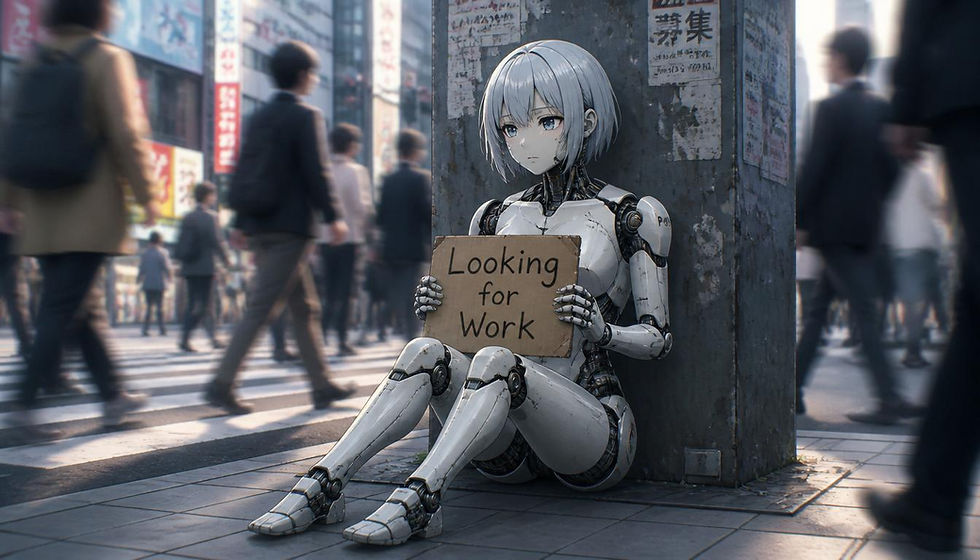
The warnings came from many directions. Some came from workers worried about their futures. Some came from economists and policy experts trying to understand what was happening. But many of the loudest warnings came from the technology world itself.
That mattered. When the people building AI warned that it could replace workers, the public listened. It made the technology feel powerful, urgent and slightly frightening. It also helped sell the idea that AI was not just another software tool. This was a revolution. A disruption. A turning point.
Then, almost as quickly, the tone began to soften.
Suddenly, the language became more reassuring. AI would not simply replace people. It would support them. It would make workers more productive. It would keep humans in the loop. It would create new roles, not just remove old ones. It would be a partner, not a threat.
That shift raises an obvious question.
Why did the story change just as the money got serious?
Selling the Storm
The early AI job panic served a purpose, whether intentionally or not.
If you are trying to convince investors, governments and businesses that your technology is world-changing, then saying it may transform the labour market is a very effective message. Nothing says “important” quite like a tool that could alter the future of work itself.

The threat of job disruption helped prove scale. It suggested that AI was not merely useful, but unavoidable. If it could replace coders, writers, analysts, administrators, designers, researchers, customer service staff and junior professionals, then it was not just a product. It was a new industrial force.
That message was commercially powerful. It encouraged companies to invest early, adopt quickly and fear being left behind. It encouraged governments to take the technology seriously. It encouraged markets to treat AI companies as future-defining businesses.
The warning, in other words, helped create the urgency.
But warnings change once the people hearing them start to worry too much.
When Fear Becomes a Business Risk
There is a limit to how much panic an industry can benefit from.
At first, the idea that AI could transform jobs makes the technology look valuable. But once workers, regulators and politicians start asking harder questions, the same message becomes dangerous. If AI really is a job-destroying machine, then perhaps it needs stronger regulation. Perhaps companies using it need closer scrutiny. Perhaps workers need protection. Perhaps public money should not be used to support firms that automate people out of employment.
That is where the sales pitch becomes awkward.
The industry needs AI to look powerful enough to justify a huge investment, but not so socially destructive that it provokes serious resistance. It needs executives to believe they must adopt it, but workers not to revolt against it. It needs governments to support innovation, but not panic about unemployment. It needs the public to be impressed, but not frightened enough to demand limits.
So the language shifts.
The storm is still coming, but now the people who warned us about it want to sell us the umbrella.
The New Softer Message
The newer message from parts of the technology industry is far more careful. AI is now described less as a replacement for humans and more as an amplifier of human potential. It will help people work faster, remove dull tasks, unlock productivity and let employees focus on higher-value work.
There is truth in that. AI can be useful. It can summarise documents, speed up research, draft content, analyse data, support coding, automate repetitive admin and help workers get through tasks more quickly. In some workplaces, it may genuinely reduce drudgery.
The problem is that this softer message often arrives after years of much harsher predictions.
Workers are not imagining the contradiction. They heard the earlier warnings. They saw the layoffs. They watched companies talk about efficiency, restructuring and automation. They noticed job adverts changing, graduate opportunities tightening and entry-level work becoming more uncertain.
So when the message suddenly becomes “don’t worry, AI will help you”, many people hear something else.
They hear an industry trying to calm the room after making everyone afraid.
The Reality Is Messier Than Either Story
The difficult truth is that neither version of the story is fully satisfying.
It is too simple to say AI will destroy all jobs. Labour markets are complicated, and technology rarely moves through the economy in a straight line. Some jobs disappear, some change, some grow and some new ones are created. Companies that use AI well may hire more people in certain areas, especially if the technology helps them expand.
But it is also too simple to say AI is merely a helpful tool that will leave workers untouched.
The evidence so far suggests a messier picture. Some roles are more exposed than others. Some early-career jobs may face greater pressure. Some companies are redesigning work around AI. Some are using AI to justify hiring freezes or smaller teams. Some workers are being asked to produce more in less time. Others are being told to learn tools that may eventually reduce the need for their own role.
That is not a clean revolution.
It is a power shift.
Entry-Level Workers May Be the First Test
One of the biggest worries is what happens to entry-level work.
Many careers begin with tasks that are not glamorous: drafting, checking, summarising, organising, researching, answering simple questions, preparing basic analysis and learning by doing. These tasks may look easy to automate, but they also act as training grounds.

If AI absorbs too much of that early work, companies may gain short-term efficiency while weakening the path for new workers to develop judgment and experience.
This is one of the most serious risks in the AI jobs debate. The first jobs lost may not always look dramatic. They may appear as roles that are never advertised, graduate schemes that shrink, junior positions that become harder to justify or teams that decide they can manage without replacing someone who leaves.
The public may not see mass unemployment overnight. Instead, the bottom rung of certain careers may quietly move higher.
That matters because if young workers cannot get onto the ladder, it will not matter how many senior roles remain.
Layoffs, Restructuring and Convenient Language
Another reason people are suspicious is that layoffs and AI investment often happen in the same period.
Large technology companies have cut jobs while also spending enormous sums on AI infrastructure, data centres, models and automation. In some cases, companies are careful to say that jobs are not being directly replaced by AI. In other cases, executives are more open about using AI to work with fewer people, redesign teams or reduce hiring needs.
The language can become slippery.
A company may not say, “AI replaced these workers.” It may say it is becoming more efficient, restructuring for the future, simplifying operations, focusing on growth areas or investing in automation. The result for the worker can feel very similar.
This is why the public does not always trust corporate reassurance. People know that businesses rarely announce uncomfortable decisions in plain English. They know that job losses can be dressed up as a transformation. They know that “efficiency” often means fewer people doing more work.
If AI is part of that story, workers have every reason to pay attention.

The Money Is Now Too Big for Panic
The AI industry is now tied to enormous investment. The biggest technology companies are spending heavily on data centres, chips, cloud infrastructure and model development. Start-ups are seeking huge valuations. Investors are betting on AI becoming embedded across the economy. Governments are competing to attract AI investment and position themselves as leaders.
At that scale, panic becomes inconvenient.
An industry that depends on public acceptance cannot be seen as openly celebrating job destruction. A company preparing for major investment, public listing or regulatory scrutiny has a strong incentive to sound responsible, balanced and human-centred.
That does not mean every softer statement is dishonest. Some leaders may genuinely believe the early fears were too strong. Some may be responding to new evidence. Some may recognise that adoption works better when workers are involved rather than threatened.
But the timing still matters.
When the message changes as the financial stakes rise, people will naturally wonder whether the shift is about evidence, image management, or both.
Workers Are Being Asked to Trust the Same People Who Frightened Them
This is the human problem at the centre of the debate.
Workers were told AI was powerful enough to threaten their jobs. Now they are being told to trust that the same technology will empower them. They were told disruption was inevitable. Now they are told the future can be collaborative. They were told to prepare for a labour market shock. Now they are told not to overreact.
That is a lot to ask.
Trust is not built by changing the message and expecting everyone to forget the first version. If tech leaders want workers to believe the new story, they need more than slogans about productivity. They need transparency about how AI is being used, which roles are affected, what training is being provided, what protections exist and whether the gains are shared.
Without that, “AI will help workers” can sound like a line written for investors rather than employees.
The Productivity Trap
There is another possibility that deserves attention. AI may not eliminate many jobs immediately, but it may still change work in ways that make life harder.
If AI allows one person to do more, companies may simply raise expectations. Emails must be answered faster. Reports must be produced more quickly. Content must be generated in greater volume. Customer queries must be handled with fewer staff. Meetings must be summarised automatically, but the number of meetings does not decrease.
In that version of the future, workers are not replaced. They are accelerated.
That may be profitable, but it is not necessarily liberating. Productivity gains can become another way to squeeze more output from the same people, unless workers share in the benefit through better pay, shorter hours, reduced pressure or more meaningful work.
This is why the debate cannot only be about whether jobs disappear. It also has to ask what happens to the jobs that remain.
Was the Panic Real or Useful?
The uncomfortable answer may be that the AI job panic was both real and useful.
It was real because AI genuinely can perform tasks that were previously done by humans. It is already reshaping parts of work, and some jobs will be reduced, changed or removed. Pretending otherwise would be naive.
But it was also useful because fear helped the industry sell urgency. It helped create the impression that AI adoption was not optional. It gave executives a reason to invest, investors a reason to pour money in, and companies a reason to reorganise around tools that were still proving themselves.
Now that the money is committed, the industry needs a calmer story.
That does not mean the original warning was entirely false. It means the message may have served different purposes at different moments.
The Question Workers Should Be Asking
The most important question is not whether AI is good or bad. That framing is too simple.
The better question is: who benefits from the way AI is introduced?
If AI removes repetitive work and gives people more time, more autonomy and better conditions, then it could be genuinely positive. If it helps businesses grow and creates new roles, that matters. If it improves services, reduces waste and supports skilled workers, the benefits should not be dismissed.
But if AI is used mainly to cut headcount, reduce bargaining power, increase surveillance, intensify workloads or transfer more value to shareholders, then the public has every reason to be sceptical.
Technology does not arrive with a single destiny. It is shaped by business choices, regulation, worker power and public pressure.
The danger is that people are told AI is inevitable, so they stop asking who is steering it.
The Story Changed, But the Risk Has Not Gone Away
The softer tone from tech leaders may prove partly justified. It may be true that AI creates more jobs than expected, that companies using it grow faster, and that the worst unemployment fears do not materialise. That would be good news.
But the change in tone should not make everyone relax too quickly.
The risks have not disappeared simply because the language has improved. Entry-level jobs may still be squeezed. Certain roles may still be automated. Workers may still be asked to do more with less. Companies may still use AI as cover for cuts they already wanted to make. Public policy may still lag behind the speed of adoption.
The story has changed.
The power dynamics have not.

The Real Lesson of the AI Job Panic
The AI job panic has revealed something important about the technology industry. It knows how to create urgency, and it knows how to soften fear when urgency becomes politically inconvenient.
That does not mean every tech leader is lying. It does not mean every warning was cynical. It does not mean AI will destroy work or save it automatically.
But it does mean the public should listen carefully when the people selling the technology change the story around it.
Because workers are not just reacting to AI. They are reacting to being told one thing when the industry needs excitement, and another when it needs trust.
The question is not only whether AI will take jobs.
The question is whether the people building it are being honest about what they want it to do.