A Cultural Shift That Feels Long Overdue
For years, the conversation around social media and young people moved in uncertain circles. Parents worried, teachers complained, campaigners warned, and technology companies insisted that their platforms were tools for connection, creativity and expression. Somewhere between those positions, most of society learned to live with the unease.
That unease now feels as though it has reached a turning point.
According to the BBC report, the Academy of Medical Royal Colleges has told a government consultation that social media use now ranks alongside smoking as a threat to the health of young people, urging doctors to routinely ask younger patients about screen time and social media use. The comparison is striking, not because social media and tobacco are identical, but because it places online platforms in a category society usually reserves for products that became widespread before their harms were fully understood.
The language matters. When senior medical voices begin comparing social media to smoking, the question is no longer whether parents are being overprotective or whether children simply need more resilience. The question becomes whether the systems young people use every day have been allowed to grow faster than society’s ability to understand and regulate them.
The Internet Was Not Supposed to Become This
The early promise of social media was not entirely false. For many young people, online platforms have offered friendship, creativity, identity and access to communities they may not have found locally. That part of the story still matters, because any serious discussion has to acknowledge that digital life is not simply harmful by default.
But the internet young people now inhabit is not just a neutral space where connection happens. It is a commercial environment built around attention, retention and engagement. The platforms are not merely hosting content; they are shaping behaviour through design choices that encourage users to stay longer, scroll further and return more often.
That is why the government’s consultation is not only looking at age limits. It is also considering restrictions on features such as night-time access, autoplay and infinite scroll, which suggests a growing recognition that the structure of social media itself may be part of the problem.
This is the deeper issue. We created platforms designed to maximise engagement, then seemed surprised when children found them difficult to leave.
Why the Smoking Comparison Lands
The comparison with smoking is powerful because it is not really about the product itself. It is about a pattern.
Smoking became normal before society fully understood the long-term consequences. It was advertised, glamourised, embedded into everyday life and, for a long time, treated as a personal choice rather than a public health problem. Only later did regulation, age restrictions and cultural attitudes begin to shift.
Social media is now passing through a similar kind of scrutiny. It has already become part of childhood before the evidence, regulation and cultural norms around it have fully settled. Families have had to make decisions in real time, often without clear guidance, while platforms developed at a pace that public institutions struggled to match.
The comparison is not perfect, and it should not be treated as if it is. There is no broad scientific consensus that screen time overall is harmful to children, as the BBC report itself notes. But the concern being raised is more specific than screen time alone. It is about exposure to harmful content, compulsive design, online pressure and the emotional impact of platforms that are constantly competing for a child’s attention.
The Harm Is Not Always Visible
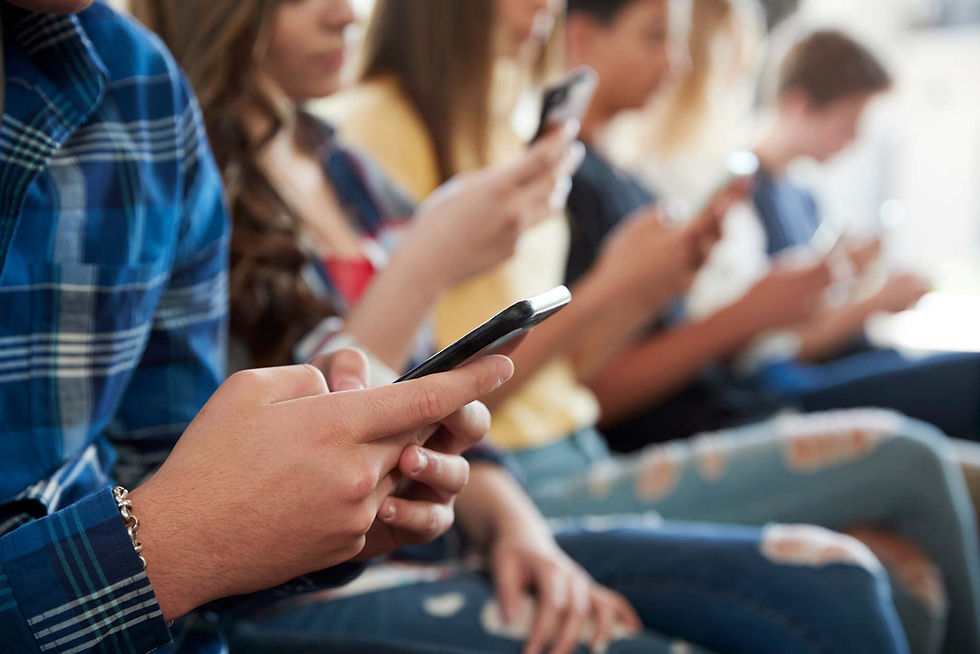
One of the difficulties with social media harm is that it often does not look dramatic from the outside. A child sitting quietly on a phone can appear safe, calm and occupied. The risk is hidden inside the content they are seeing, the conversations they are having and the algorithms deciding what appears next.
The BBC article highlights concerns about young people being exposed to extreme violence online, and consultant child psychiatrist Dr Emily Sehmer told BBC Breakfast that damaging content can reach children within seconds. That speed is central to the concern, because unlike older forms of media, social platforms do not wait for parental permission, broadcast schedules or obvious entry points. They are immediate, personalised and often difficult to supervise properly.
This is why some doctors now want social media use to become part of routine health conversations with young patients. If online life is occupying such a large part of childhood, then ignoring it in medical and mental health settings begins to look increasingly unrealistic.
Ban, Restrict or Redesign?
The most difficult question is what should happen next.
Some campaigners and bereaved families are pushing for stronger age restrictions, arguing that platforms which expose children to harm should not be accessible until they have been made demonstrably safer. The BBC report notes that Australia has already introduced a ban, and that the UK government is considering whether something similar, or some form of restriction, should be introduced for under-16s.
Others argue that a blanket ban may not work, or could even create new problems. Children may find ways around restrictions, particularly if age checks are weak or inconsistent. There is also the risk that young people who rely on online spaces for support, identity or community could be cut off without proper alternatives.
That is why the more serious debate may not be between “ban” and “do nothing”. It may be about whether platforms should be required to remove or redesign the features most likely to cause harm before they are allowed to market themselves to children. Campaigners have called for restrictions on unsafe apps and design features such as infinite scrolling, disappearing messages and push notifications, with access linked to stronger safety standards rather than a simple one-size-fits-all ban.
The Responsibility of Big Tech
At the centre of this debate sits a question that technology companies have often tried to avoid.
If platforms are designed to keep users engaged for as long as possible, and if those users include children, then how much responsibility do companies carry for the outcomes that follow?
It is not enough to say that parents should monitor everything, because the scale and complexity of modern platforms make that expectation increasingly unrealistic. Nor is it enough to say that children must simply learn to manage their own use, when the systems they are using have been engineered by adults with enormous financial and technical power.
The tobacco comparison becomes especially uncomfortable here. For years, industries facing criticism have tended to present harm as a matter of individual responsibility while resisting structural regulation. Social media companies now face a similar challenge. If their platforms are safe, they will need to show it not through slogans, but through design, transparency and accountability.
Technology Secretary Liz Kendall told the BBC that action will be taken by the end of the year, and that the government is considering a broad range of issues, including platforms beyond traditional social media such as Roblox and Discord. That matters because children’s online lives do not fit neatly inside old categories. Gaming, messaging, AI chatbots and social feeds increasingly overlap.
Childhood in an Endless Feed
Part of what makes this issue so culturally significant is that social media does not simply take up time. It changes the texture of childhood.
Previous generations had boredom, distance and delay built into daily life. You could not always reach your friends. You could not instantly compare yourself with thousands of strangers. You could not carry an endless stream of images, arguments, violence, beauty standards, rumours and approval metrics in your pocket.
Today, many children grow up in a constant feedback loop. Their friendships, entertainment, identity and social status can all become entangled with platforms designed to refresh endlessly. That does not mean every child is harmed in the same way, but it does mean childhood itself is taking place under conditions that did not exist before.
This is why the debate feels bigger than screen time. It is not just about how many hours are spent online, but about what those hours contain, how they are structured and what they are teaching young people to expect from the world and from themselves.
A Public Health Question, Not a Moral Panic
There is always a danger that conversations about young people and technology become moral panic. Every generation worries about the next one, and new media has often been blamed for social change long before the evidence catches up, but dismissing this as panic would now be too easy.
When doctors, bereaved families, online safety campaigners, police leaders and government ministers are all asking whether stronger action is needed, the issue has clearly moved beyond casual parental concern. The disagreement is no longer about whether there is a problem, but about what kind of problem it is, and how far the state should go in trying to fix it.
That is why the next phase matters. Regulation built in haste can fail, but regulation delayed too long can leave children exposed while adults argue over details. The challenge is to act without pretending the answer is simple.
The Moment the Tone Changed
The most important thing about this debate may be the shift in tone. Social media is no longer being discussed only as entertainment, communication or harmless distraction. It is increasingly being discussed as an environment with health consequences, commercial incentives and design risks. That is a profound change.
Whether Britain moves towards a ban, tighter age checks, app curfews or restrictions on specific features, the cultural direction is becoming clearer. The age of treating social media as a neutral part of childhood may be coming to an end.
The smoking comparison may not be exact, but it captures something society is beginning to recognise. Some products become normal before we fully understand what they do to us.
And when that happens, the question eventually changes. Not whether people should have known better. but why does it take so long to act?