

Toy Story 5 and the Screen Time Problem Hiding in Plain Sight

When the Toys Have to Compete With a Tablet

For almost thirty years, Toy Story has understood something unusually tender about childhood. The franchise has never really been about toys, not in the simple sense. It has been about imagination, attachment, growing up and the quiet heartbreak of being left behind when a child’s world changes.
That is why the premise of Toy Story 5 feels sharper than it first appears. This time, Woody, Buzz, Jessie, and the rest of the gang are not simply facing another toy, another rival or another adventure beyond the bedroom. They are facing something far more recognisable to modern families: a tablet.
Bonnie’s attention is no longer being pulled by a shiny new action figure or a talking doll. It is being captured by a screen. That may sound like a neat Pixar joke, but it also carries one of the most relevant family anxieties of the moment. What happens to play when the most powerful thing in the room is not a toy at all, but a device designed to hold attention for as long as possible?
A Family Film With a Very Modern Fear
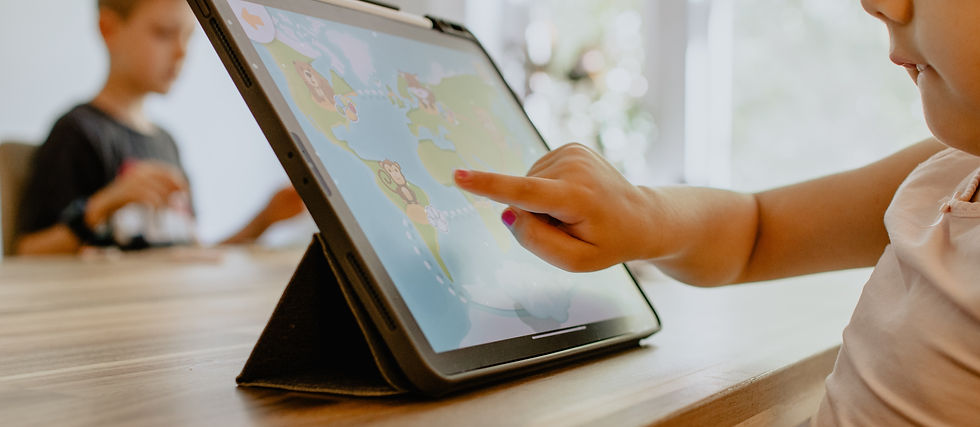
The genius of this idea is that nearly every parent, grandparent, teacher or older sibling will recognise it immediately. The scene almost writes itself. A child sitting still, face lit by a screen, toys scattered nearby but ignored. The room is full of possibilities, yet the attention has narrowed into a glowing rectangle.
It is not hard to see why Pixar has chosen this as the emotional battleground. Toy Story has always reflected the anxieties of its time. The first film explored what happens when old favourites are replaced by something newer and flashier. Later films dealt with abandonment, nostalgia and the passage from childhood into adulthood. Toy Story 5 appears to be asking a different question for a different age: can traditional play survive in a world built around screens?
That question matters because this is no longer a fringe concern. Children’s screen habits are now part of public health debates, school policy discussions and family life across the UK and beyond. The argument is no longer simply about whether children spend “too much time” on devices. It is about what kind of attention those devices encourage, what they displace, and how early that displacement begins.
The Problem Is Not Screens Alone
It is important to say this clearly. Screens are not automatically bad, and technology is not the enemy of childhood. Children can learn, create, communicate and explore through digital tools in ways that previous generations could never have imagined. A tablet can be educational, entertaining and genuinely useful, especially when used with care and context.
The problem is not the existence of screens. The problem is the environment around them.
Modern apps, games and platforms are often designed to keep users engaged. Autoplay removes the pause between one piece of content and the next. Infinite scrolling removes the natural endpoint. Notifications pull attention back again and again. Algorithms learn what holds interest and then deliver more of it, often faster than adults can properly understand or supervise.
For children, whose habits and self-regulation are still developing, that design matters. A tablet is not just a passive object sitting in the room. It is an interactive system competing for attention, and it is very good at winning.
What Screen Addiction Really Means
The phrase “screen addiction” is widely used, but it needs careful handling. Not every child who enjoys a tablet is addicted, and not every hour spent online is harmful. The concern is more specific than that.

The worry is about problematic use, when screen time begins to interfere with sleep, mood, schoolwork, physical activity, family interaction or offline play. It is about children becoming distressed when devices are removed, struggling to disengage, or choosing screens over nearly every other form of activity.
This is where Toy Story 5’s setup becomes so effective. The toys are not just fighting a gadget. They are fighting for the child’s imaginative attention, for the kind of open-ended play that does not require a battery, an algorithm or a stream of constant stimulation.
That distinction is important. Traditional play asks something different from children. It requires invention, patience, boredom, negotiation and imagination. A toy does not tell the child exactly what comes next. The child has to decide.
A screen often does the opposite. It keeps deciding for them.
The Lost Value of Boredom
One of the quieter losses in modern childhood may be boredom. Not the deep, miserable kind, but the ordinary boredom that used to appear between activities, journeys, meals and conversations. That empty space often became the beginning of play.
A child would invent a game because there was nothing else to do. A cardboard box became a spaceship. A garden became a battlefield. A few figures on the floor became an entire world.
Screens have made it much easier to remove that empty space. A moment of waiting can be filled instantly. A difficult mood can be softened with a video. A quiet room can be occupied by a game. For busy parents, that can be understandable and sometimes necessary. No serious conversation about screen time should pretend family life is simple.
But when every spare moment is filled, children lose opportunities to sit with their own imagination. The concern is not only that screens take time away from toys. It is that they may take time away from the mental space that makes play possible.
Parents Are Part of the Story Too
One of the more uncomfortable developments in the screen time debate is the growing recognition that children are not the only ones being shaped by devices. Adults are too.
Children learn from what they see. If phones are always present at the dinner table, during conversations, on walks, in queues and even during play, then the message is clear long before anyone says a word. Screens are not just entertainment. They are where attention goes.
That makes this issue harder, but also more honest. It is not simply a case of telling children to put the tablet down while adults continue scrolling. Healthy screen habits have to be modelled, not just enforced.
This is where Toy Story 5 may strike a nerve. Many adults watching it will not only see children in Bonnie. They may see themselves, distracted by devices, half-present in rooms that deserve more attention.
Why This Hits Differently From Older Toy Story Films
Previous Toy Story films dealt with replacement in a way that still felt emotionally familiar. Woody feared being replaced by Buzz. The toys feared being outgrown by Andy. These were painful, but natural parts of childhood. Children grow, favourites change, and toys eventually move from the centre of life to the edge of memory.
A tablet is different.
It does not simply replace one toy with another. It changes the entire structure of attention. It offers endless novelty, instant reward and constant stimulation. It does not need imagination in the same way a toy does, because it arrives already full of movement, sound, colour and instruction.
That makes the conflict feel less like jealousy and more like cultural commentary. The toys are not just worried about being forgotten. They are worried that play itself is being redesigned around something they cannot compete with.
A Timely Question for Families
The timing of Toy Story 5 feels significant because society is already in the middle of a larger conversation about childhood and technology. Governments are debating age restrictions and online safety. Doctors are being asked to take children’s digital habits seriously. Schools are rethinking phones in classrooms. Parents are trying to find rules that feel realistic rather than extreme.
The hardest part is that there is no single answer. A total rejection of screens is neither practical nor fair. Digital life is part of modern childhood, and children need to learn how to navigate it. But pretending that screens are just another harmless toy also feels increasingly naive.
The real question is balance, and whether families, schools and tech companies are giving children the conditions they need to find it.
What the Toys Still Represent
The reason the Toy Story films endure is that the toys represent something simple but profound. They stand for the emotional life of childhood, the private worlds children build when nobody is telling them exactly what to do or what to watch next.
That is why the tablet storyline works so well. It is not really about whether children should use technology. It is about whether childhood still has room for slow, imaginative, self-directed play in a world that constantly offers faster alternatives.
The toys cannot compete with a tablet in terms of novelty. They cannot refresh endlessly, recommend another video or glow in the dark. What they offer is quieter and perhaps easier to overlook.
But that may be exactly the point.
The Battle for Attention
Toy Story 5 may arrive as a family film, but its central conflict speaks to one of the defining questions of modern life. Who gets our attention, and what happens when that attention is captured too early, too often and too completely?
For children, that question matters deeply. Attention is not just about entertainment. It shapes play, learning, relationships, sleep, mood and imagination. It shapes how a child experiences the world.
That is why the idea of toys battling a tablet is more than a clever plot. It is a mirror held up to modern family life.
The age of toys may not be over.
But it is clear they are no longer only competing with each other.


