
top of page
The Slow Disappearance of the British Pub

The Slow Disappearance of the British Pub

12 May 2026

Paul Francis

Want your article or story on our site? Contact us here

A Loss You Rarely Notice Until It’s Gone

It does not usually make national headlines when a pub closes. There is no moment of collective pause, no sense of something ending in real time. Instead, it happens quietly. A sign comes down, the lights stay off a little longer than usual, and before long, the building is something else entirely. A set of flats, a convenience store, or simply another empty space waiting for a purpose.
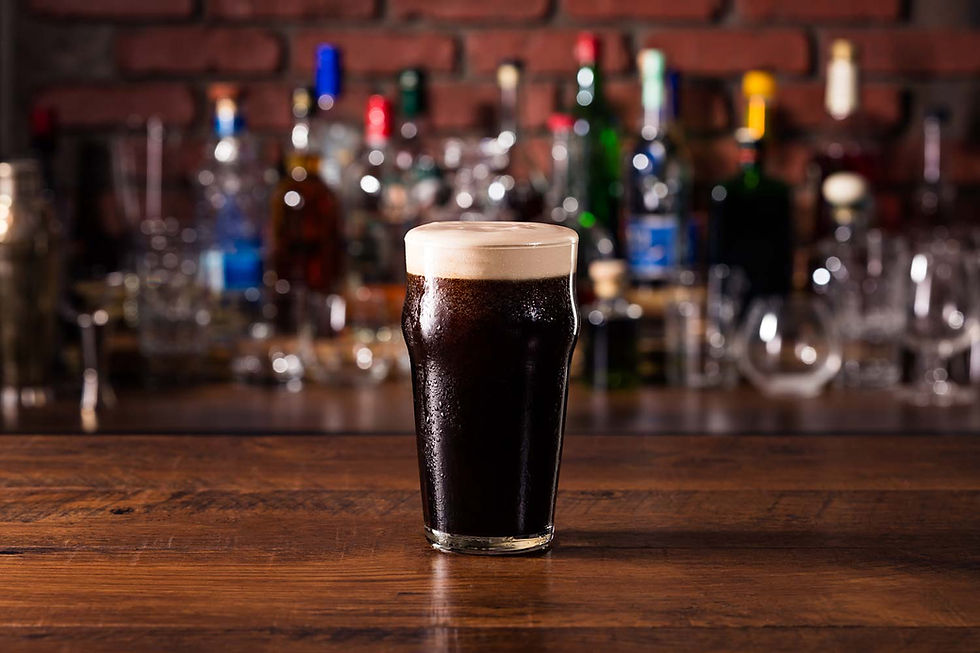

A pint of dark beer with a creamy foam head on a wooden bar. Blurred bottles and glasses on a brick wall background suggest a cozy pub.

And yet, taken together, these individual closures form a pattern that is becoming harder to ignore. In early 2026, the rate of pub closures has edged towards two per day in some periods, a figure that reflects not a sudden collapse, but a steady and ongoing decline. It is the continuation of a trend that has been unfolding for decades, gradually reshaping the social and physical landscape of Britain.


The pub is still there, in many places. But it is no longer as constant, as reliable, or as quietly present as it once was.


A Long Decline, Not a Sudden Crisis

It is easy to frame the current situation as a recent problem, driven by rising costs and post-pandemic pressures. Those factors matter, but they sit within a much longer story.

In the 1970s, the UK had around 75,000 pubs. Today, that number has roughly halved. The disappearance has not been dramatic enough to feel like a crisis at any single moment, but over time it has amounted to a profound shift. Entire areas that once had multiple local pubs now have one, or none at all.


What makes this decline particularly striking is how normal it has become. Closures are reported, noted and then absorbed into the background. There is no single event to react to, only a gradual sense that something familiar is becoming less common.


The Economics No Longer Add Up

At the centre of the issue is a simple but unforgiving reality. Running a pub has become increasingly difficult to sustain.


Costs have risen sharply in recent years. Energy bills, wages and business rates have all increased, while margins remain tight. It is often said that the profit on a pint is surprisingly small once overheads are accounted for, and for many operators, that margin has become too thin to absorb further pressure.


Taxation and regulation add another layer. Changes to alcohol duty and reductions in relief schemes have left many businesses operating in conditions that are hard to navigate, even when demand exists. The result is a situation where pubs can be busy, well-liked and still financially vulnerable.


For some, closure is not a reflection of failure, but of a model that no longer holds together.


A Change in How We Spend Our Time

If economics explain part of the story, behaviour explains the rest. The role of the pub in everyday life has shifted. Younger generations are drinking less, or choosing different environments in which to socialise. Supermarkets offer cheaper alcohol, making drinking at home more accessible. Streaming services, food delivery and digital entertainment compete for the same time that might once have been spent in a pub.


Working patterns have also changed. The rise of working from home has quietly removed one of the pub’s most reliable sources of trade, the midweek crowd that would gather after work. Without that regular flow, many pubs struggle to maintain the consistency that keeps a business stable.


These are not dramatic changes in isolation. But together, they alter the rhythm of daily life in ways that the traditional pub model was never designed to accommodate.


When the Building Becomes More Valuable Than the Business

There is another, less visible factor that accelerates the process. In many parts of the country, the land on which a pub sits has become more valuable than the pub itself. Developers can often generate greater returns by converting the site into housing or other commercial uses. Even a pub that is functioning reasonably well can find itself under pressure if the property represents a more profitable opportunity in a different form.


This creates a situation where closures are not always driven by a lack of demand but by competing economic interests. The decision is not about whether the pub works as a business, but whether it is the most valuable use of the space.


More Than a Business

What makes this decline resonate beyond the numbers is the role pubs have traditionally played in British life. They are not just places to drink. They are meeting points, places where conversations happen without planning, where communities form in small and informal ways. They provide a kind of social infrastructure that is difficult to measure but easy to feel when it is no longer there.


Friends laugh and chat at an outdoor table with drinks. One wears a pink hat. Warm, casual setting with wooden table and flower decor.

For some, the local pub is a place of routine. For others, it is where connections are made, where loneliness is eased, or where a sense of belonging is maintained without effort. These are functions that do not easily transfer to other settings.


When a pub closes, the loss is not always immediate or dramatic. But over time, it changes the texture of a place.


Not All Pubs Are Disappearing, But They Are Changing

It would be too simple to say that pubs are vanishing entirely. Many are adapting, and new venues continue to open. What is changing is the type of pub that survives.


Food-led establishments, destination venues and experience-focused spaces are becoming more common. They cater to different expectations and, in many cases, different price points. The traditional local pub, the one that exists as part of everyday life rather than as a planned outing, is becoming less central.


This is not just a matter of evolution. It represents a shift in what the pub is, and what it is for.


A Quiet Question About What Comes Next

The disappearance of the British pub is not simply a story about business closures. It is a reflection of broader changes in how people live, work and connect with each other.

As these spaces become less common, a question begins to take shape. Not immediately, and not always consciously, but steadily.


What replaces them?


The answer is not obvious. Other forms of social interaction exist, both online and offline, but few replicate the particular mix of openness, informality and accessibility that the traditional pub provided.


This is why the loss feels different. It is not just the removal of a venue, but the gradual fading of a certain kind of shared space.


A Change That Happens Without Announcement

Perhaps the most striking aspect of all is how quietly it is happening.

There is no single moment that marks the end of the British pub. No announcement that signals a turning point. Instead, there is a slow accumulation of closures, each one small enough to overlook, but together large enough to reshape the landscape.


You do not always notice when a pub disappears. Not at first, but one day, you look around and realise there are fewer places to go than there used to be and fewer reasons, perhaps, to gather in quite the same way.


Current Most Read

The Slow Disappearance of the British Pub
What Is Happening to the Systems We Rely On?
The Police Are Still There. So, Why Does It Feel Like They Aren’t?

The Slow Disappearance of the British Pub

  • Writer: Paul Francis
    Paul Francis
  • 5 hours ago
  • 5 min read

A Loss You Rarely Notice Until It’s Gone

It does not usually make national headlines when a pub closes. There is no moment of collective pause, no sense of something ending in real time. Instead, it happens quietly. A sign comes down, the lights stay off a little longer than usual, and before long, the building is something else entirely. A set of flats, a convenience store, or simply another empty space waiting for a purpose.


A pint of dark beer with a creamy foam head on a wooden bar. Blurred bottles and glasses on a brick wall background suggest a cozy pub.

And yet, taken together, these individual closures form a pattern that is becoming harder to ignore. In early 2026, the rate of pub closures has edged towards two per day in some periods, a figure that reflects not a sudden collapse, but a steady and ongoing decline. It is the continuation of a trend that has been unfolding for decades, gradually reshaping the social and physical landscape of Britain.


The pub is still there, in many places. But it is no longer as constant, as reliable, or as quietly present as it once was.


A Long Decline, Not a Sudden Crisis

It is easy to frame the current situation as a recent problem, driven by rising costs and post-pandemic pressures. Those factors matter, but they sit within a much longer story.

In the 1970s, the UK had around 75,000 pubs. Today, that number has roughly halved. The disappearance has not been dramatic enough to feel like a crisis at any single moment, but over time it has amounted to a profound shift. Entire areas that once had multiple local pubs now have one, or none at all.


What makes this decline particularly striking is how normal it has become. Closures are reported, noted and then absorbed into the background. There is no single event to react to, only a gradual sense that something familiar is becoming less common.


The Economics No Longer Add Up

At the centre of the issue is a simple but unforgiving reality. Running a pub has become increasingly difficult to sustain.


Costs have risen sharply in recent years. Energy bills, wages and business rates have all increased, while margins remain tight. It is often said that the profit on a pint is surprisingly small once overheads are accounted for, and for many operators, that margin has become too thin to absorb further pressure.


Taxation and regulation add another layer. Changes to alcohol duty and reductions in relief schemes have left many businesses operating in conditions that are hard to navigate, even when demand exists. The result is a situation where pubs can be busy, well-liked and still financially vulnerable.


For some, closure is not a reflection of failure, but of a model that no longer holds together.


A Change in How We Spend Our Time

If economics explain part of the story, behaviour explains the rest. The role of the pub in everyday life has shifted. Younger generations are drinking less, or choosing different environments in which to socialise. Supermarkets offer cheaper alcohol, making drinking at home more accessible. Streaming services, food delivery and digital entertainment compete for the same time that might once have been spent in a pub.


Working patterns have also changed. The rise of working from home has quietly removed one of the pub’s most reliable sources of trade, the midweek crowd that would gather after work. Without that regular flow, many pubs struggle to maintain the consistency that keeps a business stable.


These are not dramatic changes in isolation. But together, they alter the rhythm of daily life in ways that the traditional pub model was never designed to accommodate.


When the Building Becomes More Valuable Than the Business

There is another, less visible factor that accelerates the process. In many parts of the country, the land on which a pub sits has become more valuable than the pub itself. Developers can often generate greater returns by converting the site into housing or other commercial uses. Even a pub that is functioning reasonably well can find itself under pressure if the property represents a more profitable opportunity in a different form.


This creates a situation where closures are not always driven by a lack of demand but by competing economic interests. The decision is not about whether the pub works as a business, but whether it is the most valuable use of the space.


More Than a Business

What makes this decline resonate beyond the numbers is the role pubs have traditionally played in British life. They are not just places to drink. They are meeting points, places where conversations happen without planning, where communities form in small and informal ways. They provide a kind of social infrastructure that is difficult to measure but easy to feel when it is no longer there.


Friends laugh and chat at an outdoor table with drinks. One wears a pink hat. Warm, casual setting with wooden table and flower decor.

For some, the local pub is a place of routine. For others, it is where connections are made, where loneliness is eased, or where a sense of belonging is maintained without effort. These are functions that do not easily transfer to other settings.


When a pub closes, the loss is not always immediate or dramatic. But over time, it changes the texture of a place.


Not All Pubs Are Disappearing, But They Are Changing

It would be too simple to say that pubs are vanishing entirely. Many are adapting, and new venues continue to open. What is changing is the type of pub that survives.


Food-led establishments, destination venues and experience-focused spaces are becoming more common. They cater to different expectations and, in many cases, different price points. The traditional local pub, the one that exists as part of everyday life rather than as a planned outing, is becoming less central.


This is not just a matter of evolution. It represents a shift in what the pub is, and what it is for.


A Quiet Question About What Comes Next

The disappearance of the British pub is not simply a story about business closures. It is a reflection of broader changes in how people live, work and connect with each other.

As these spaces become less common, a question begins to take shape. Not immediately, and not always consciously, but steadily.


What replaces them?


The answer is not obvious. Other forms of social interaction exist, both online and offline, but few replicate the particular mix of openness, informality and accessibility that the traditional pub provided.


This is why the loss feels different. It is not just the removal of a venue, but the gradual fading of a certain kind of shared space.


A Change That Happens Without Announcement

Perhaps the most striking aspect of all is how quietly it is happening.

There is no single moment that marks the end of the British pub. No announcement that signals a turning point. Instead, there is a slow accumulation of closures, each one small enough to overlook, but together large enough to reshape the landscape.


You do not always notice when a pub disappears. Not at first, but one day, you look around and realise there are fewer places to go than there used to be and fewer reasons, perhaps, to gather in quite the same way.

bottom of page